How Backflow Contaminates Drinking Water
Backflow pushes dirty water backward through your pipes and into your drinking supply. Here is how it happens in Yorba Linda and how testing stops it.
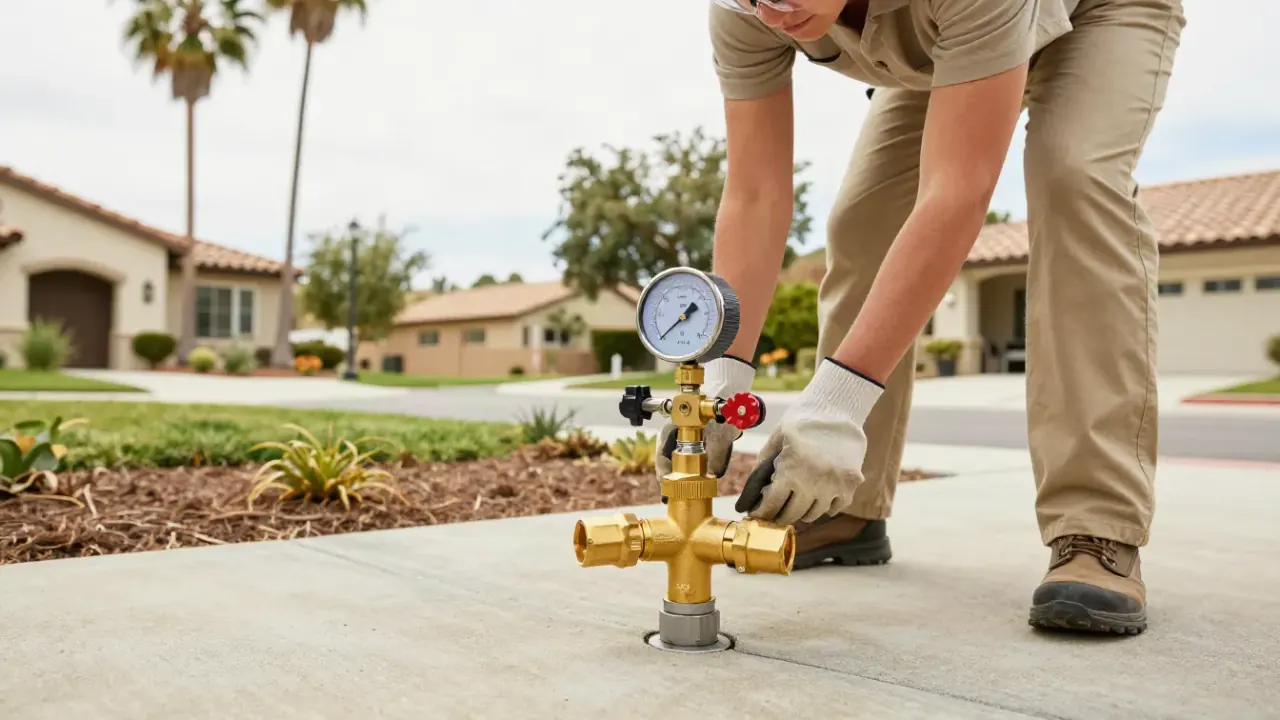
Backflow contaminates drinking water when a sudden drop in water main pressure pulls water backward through your pipes, dragging whatever is sitting in your irrigation lines, boiler, or hose bibs into the same supply you drink from. The contamination is invisible, usually odorless, and can reach your kitchen tap within minutes of a main break or a heavy fire hydrant draw. Below we break down exactly how that reversal happens, what it carries with it, and what keeps it from happening at your Yorba Linda address.
If you have ever watched a glass of tap water and wondered whether something upstream could have touched it, you are asking the right question. We run Backflow Testing Yorba Linda CA calls every week, and the answer is almost always the same: the water is fine because a working device stopped the reversal before it reached you.
What Backflow Actually Is
Backflow is the unwanted reversal of water flow in a plumbing system, and it happens because water always follows pressure. Your city supply is built to push water one direction, from the main into your home or business. When that push weakens, the pressure inside your own pipes can briefly become higher than the pressure in the main, and the flow flips.
There are two flavors of it. Backsiphonage is the common one: a main break, a water district repair, or a fire hydrant opened hard down the street drops main pressure so fast that your system drains backward. Backpressure is the other: a boiler, a recirculating pump, or an irrigation booster pushes water the wrong way even when main pressure is normal.
Your backflow preventer is the one-way valve that stands between those two scenarios and your drinking glass. It is a mechanical device, which means it wears out, and that is why Orange County water agencies require it to be tested on a schedule instead of trusted forever.
What Causes Backflow in Yorba Linda Plumbing
What causes backflow contamination in Yorba Linda CA is almost never a single dramatic failure. It is a pressure event plus a cross-connection, and this city has plenty of both.
The pressure events we see most:
- Main breaks and district repairs. Yorba Linda sits on a hillside system with aging segments of main, and any repair upstream drops pressure for the whole street.
- Fire hydrant testing and firefighting. A hydrant flowing at full open can pull main pressure down 20 PSI or more in seconds.
- High-demand summer irrigation. From June through September, hundreds of sprinkler zones running at once strain the same mains.
- Boilers and pool heaters. Thermal expansion pushes pressure back toward the supply line.
The cross-connections are the other half of the equation. A cross-connection is any point where clean water and potentially dirty water can touch. A hose threaded into a bucket of fertilizer. A drip irrigation line buried next to a sewer cleanout. A fire sprinkler riser tied into a building's domestic supply. Each one is harmless until the day pressure flips.
How Contamination Travels Into Your Drinking Water
How backflow contaminates drinking water in Yorba Linda CA comes down to a four-step chain, and every link has to be present for anything to reach your tap.
- Pressure drops in the main. A break, a hydrant, or a district shutdown pulls supply pressure below the pressure inside your plumbing.
- Flow reverses. Water in your irrigation lines, boiler loop, or hose bibs starts moving backward toward the meter.
- It picks up whatever it passes. Fertilizer, pesticides, rust, boiler treatment chemicals, or bacteria sitting in a stagnant line get carried along.
- It crosses into the potable side. If the backflow preventer is stuck open, fouled, or missing, that water merges with the supply feeding your kitchen and bathrooms.
A failed double check valve on a residential irrigation line is the single most common path we find. The device sits in a box near the curb, gets baked by inland heat, and quietly stops sealing. Nobody notices until the annual test.
Once contamination is in the potable side, it does not stay in one fixture. It travels to every tap downstream of the cross-connection, which is why a single bad irrigation device can affect an entire house.
Is Backflow Water Dangerous in Yorba Linda California?
Yes, backflow water can be dangerous in Yorba Linda California, and the risk scales with what the water passed through on its way back. Clean irrigation water backing up is unpleasant. Water that crossed a boiler loop, a chemical injector, or a sewer-adjacent line is a genuine health event.
The contaminants that worry us most:
- Bacteria and viruses from sewage-adjacent cross-connections, which can cause gastrointestinal illness within 24 to 72 hours.
- Pesticides and fertilizers pulled back through irrigation lines, especially in neighborhoods with heavy landscaping.
- Boiler and HVAC treatment chemicals, which are not meant for human consumption at any concentration.
- Sediment and rust, which are not toxic but signal that the device has been passing debris for a while.
Can backflow make you sick in Yorba Linda? It can, and the frustrating part is that you would probably blame the flu or a bad restaurant meal. There is no taste test that tells you the difference.
Where Backflow Hits Yorba Linda Properties Hardest
Backflow risk in Yorba Linda tracks the age of the plumbing and the amount of irrigation on the lot, and that varies block by block.
In the older tracts, the original devices are often 20 to 30 years old and were sized for a smaller landscape than the one that exists now. We see this constantly on East Lake Village Backflow Testing visits, where mature trees and expanded sprinkler zones push more demand through the same assembly.
On the newer hillside streets, the issue is different. Larger lots mean longer irrigation runs, more hose bibs, and more places for a cross-connection to hide. Properties up around Kerrigan Ranch Backflow Testing often have two or three separate irrigation zones feeding from one assembly, and each zone is its own potential backflow path.
Commercial and HOA properties carry the highest stakes. A strip center with a fire riser, a restaurant with a boiler, and a landscape irrigation line all tied to one meter means three cross-connections on one service. That is why we handle those under Commercial Backflow Testing Yorba Linda CA, where the testing frequency and the reporting requirements are stricter than residential.
Common Mistakes We See on Backflow Devices
Most backflow failures we find are not random. They follow a short list of predictable mistakes.
Skipping the annual test because nothing looks wrong. A backflow preventer can fail internally while the outside looks brand new. The only way to know is to test it.
Leaving a hose in a bucket or a pool. Any hose submerged in a non-potable liquid is a direct cross-connection. Pull it out when you are done.
Ignoring the test tag. That tag lists the last test date and the tester. If it is more than 12 months old, you are out of compliance.
Letting a landscaper work on the device. Irrigation repairs are fine. Opening a backflow assembly requires certification, and a wrong rebuild can leave the device passing water in both directions.
Replacing a device without reporting it. A new assembly needs to be tested and reported to the water district, or the file still shows the old one.
How to Prevent Backflow Contamination Near Me in Yorba Linda
How to prevent backflow contamination near me in Yorba Linda comes down to three habits: test annually, fix cross-connections, and keep the device accessible.
The annual test is the backbone. California requires backflow assemblies to be tested every 12 months by a certified tester, and the results go to your water agency. We handle that end to end through Annual Backflow Assembly Testing Yorba Linda CA, including the paperwork, so you are not chasing a compliance notice six weeks later.
Around the property, the fixes are simple. Keep hoses out of standing water. Make sure irrigation lines and domestic lines never share a fitting. Do not bury the device box under mulch or let a fence panel block access. If the assembly sits in a spot where it gets hit by a car or a lawnmower, relocation is worth considering.
If your device is older than 15 years or has failed two tests in a row, replacement usually costs less than repeated repairs. Typical 2026 pricing in this area runs $250 to $450 for a standard residential replacement, installed and tested, versus $150 to $300 for a rebuild that may not hold.
When to Call a Professional
Call us when your test is due, when you have failed a test, or when you are not sure a device is even installed. Those are the three calls we get most, and all three are quick to resolve.
You should also call if you are adding irrigation, installing a pool, putting in a fire sprinkler line, or converting a garage into an ADU. Any of those changes can create a new cross-connection that did not exist before, and the device may need to be resized or replaced to match.
We test, repair, and replace backflow assemblies across Yorba Linda, and we file the results with your water district so the compliance side is handled. If you are not sure where your device is or when it was last tested, we can find out in one visit.
Frequently Asked Questions
How does backflow contaminate drinking water in Yorba Linda CA?
A pressure drop in the city main reverses flow, pulling water from irrigation lines, boilers, or hose bibs back toward your supply. If the backflow preventer is stuck open or missing, that water merges with the potable line feeding your taps. Most cases trace back to a failed irrigation device near the curb.
Is backflow water dangerous in Yorba Linda California?
It can be. Water that crossed a boiler loop, chemical injector, or sewer-adjacent line can carry bacteria, pesticides, or treatment chemicals that cause illness within 24 to 72 hours. Clean irrigation water backing up is less serious but still a sign the device has failed and needs testing.
How can I prevent backflow contamination in Yorba Linda?
Test your assembly every 12 months, keep hoses out of buckets and pools, and never let irrigation and domestic lines share a fitting. Keep the device box clear of mulch and fencing. If the assembly is older than 15 years or has failed twice, replace it rather than rebuilding again.
What causes backflow in plumbing in Yorba Linda CA?
Main breaks, fire hydrant draws, and heavy summer irrigation demand drop supply pressure fast enough to reverse flow. Backpressure from boilers and pool heaters does the same thing. The reversal only becomes contamination when a cross-connection exists downstream of the device.
Does backflow affect my drinking water in Yorba Linda?
Only if the preventer fails or is missing. A working assembly stops the reversal at the device, so your tap water stays clean. That is why the annual test matters more than the device itself. A passing test means the barrier held for another year.
Get Help With Backflow Testing in Yorba Linda
If your test is due, your tag is expired, or you have never seen the device on your property, we can take care of it this week. We test, repair, and report, and we will tell you straight whether the assembly has another year in it or needs to be replaced.
Call Yorba Linda Backflow Testing at (714) 880-7120 to schedule your annual test and keep your drinking water on the right side of the valve.